

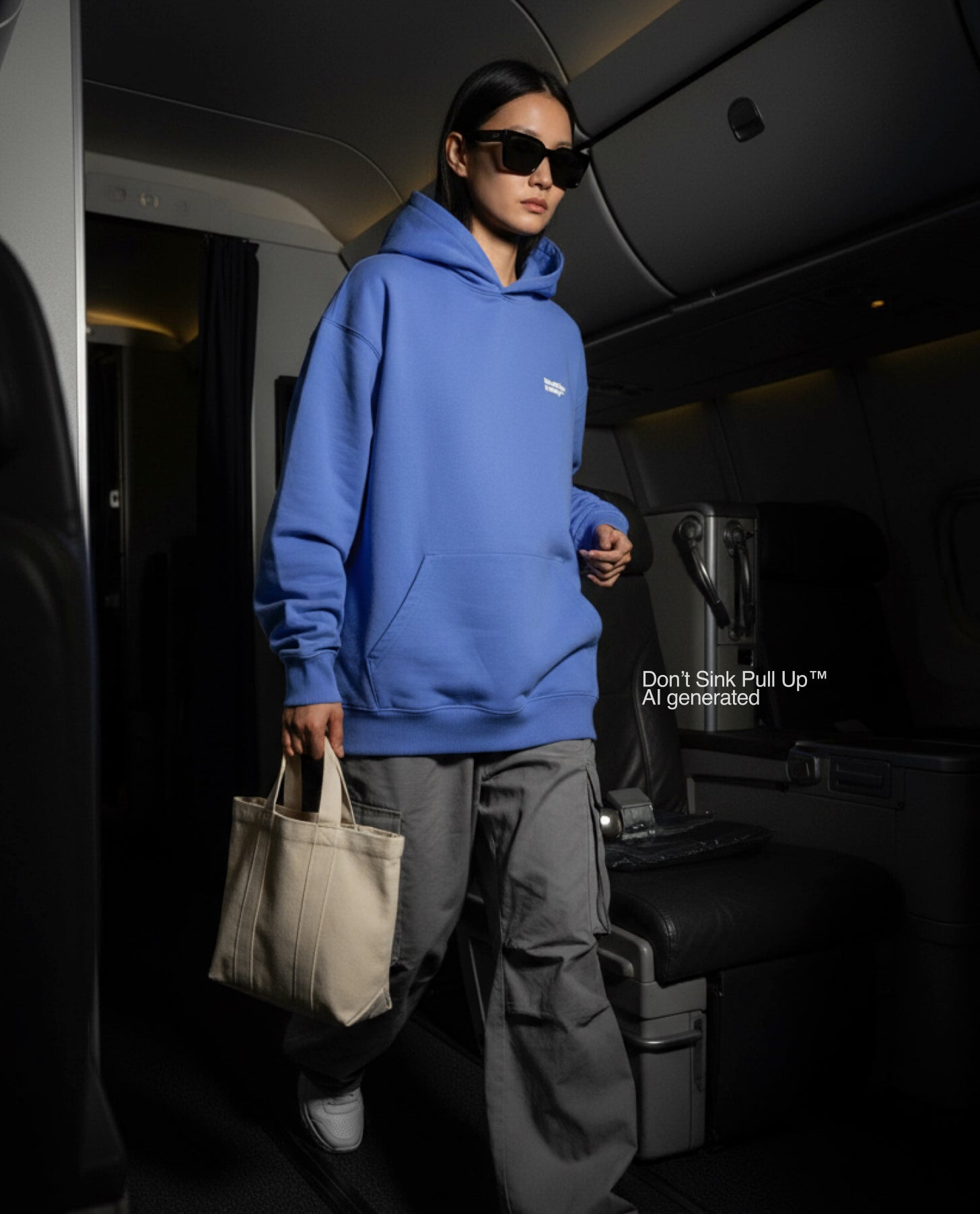
Challenges of an aviation fashion brand
For our company, it seemed like a simple topic: advertising photos .
Products are most effective in their natural environment. For example: mountain bikes belong in the mountains, guitars on stage or in the studio.
This principle is clear. An image should show where a product is used and what kind of atmosphere it conveys.
As a fashion brand with a clear connection to aviation, it seemed natural for us to photograph our products in authentic airport and aircraft environments. But this turned out to be one of our biggest obstacles.
Requests to German airports to take photographs in the security area, at baggage carousels or on the tarmac were understandably unsuccessful.
These areas are highly sensitive and inaccessible for photography. Spontaneous attempts during my own travels also yielded no usable results. The lighting was unsuitable, the environments were inappropriate, and the process was too hectic.
We looked for alternatives: train stations, parking garages, outdoor areas, studio sets. But recreating a realistic airplane cabin is expensive, time-consuming, and unsustainable. Props would be disposed of after a short time, and the costs of an extensive shoot would ultimately have to be factored into the product prices.
It was precisely at this point that it became clear that artificial intelligence offers a real opportunity.
Although AI has long been viewed critically in the fashion industry because cuts or seams are not always perfectly replicated, it opens up new possibilities for us.
One of these is diversity: AI allows us to realistically depict models with a wide range of skin tones, body shapes, genders, and backgrounds. Without limitations. Without casting costs. Without being dependent on which people are currently available. Because that's what aviation is all about, that's what Don't Sink Pull Up™ is all about—everyone belongs.
In addition, we save on the use of short-lived props, thus avoiding unnecessary waste, and we do not have to pass on the high costs of a large photo shoot to our end customers.
The result: authentic-looking scenes, reduced environmental impact, and stable prices.
We have established a clear and transparent compromise for this.
In our FAQs we openly explain how and why we use AI.
At the same time, there's a firm limit. Our product photos in the shop remain completely authentic. No AI, no exceptions. Even if a photo isn't perfect, our customers always see the actual product.
For us, responsible use of AI means combining innovation with authenticity, acting sustainably, making diversity visible, and consistently focusing on the real product.
Read more
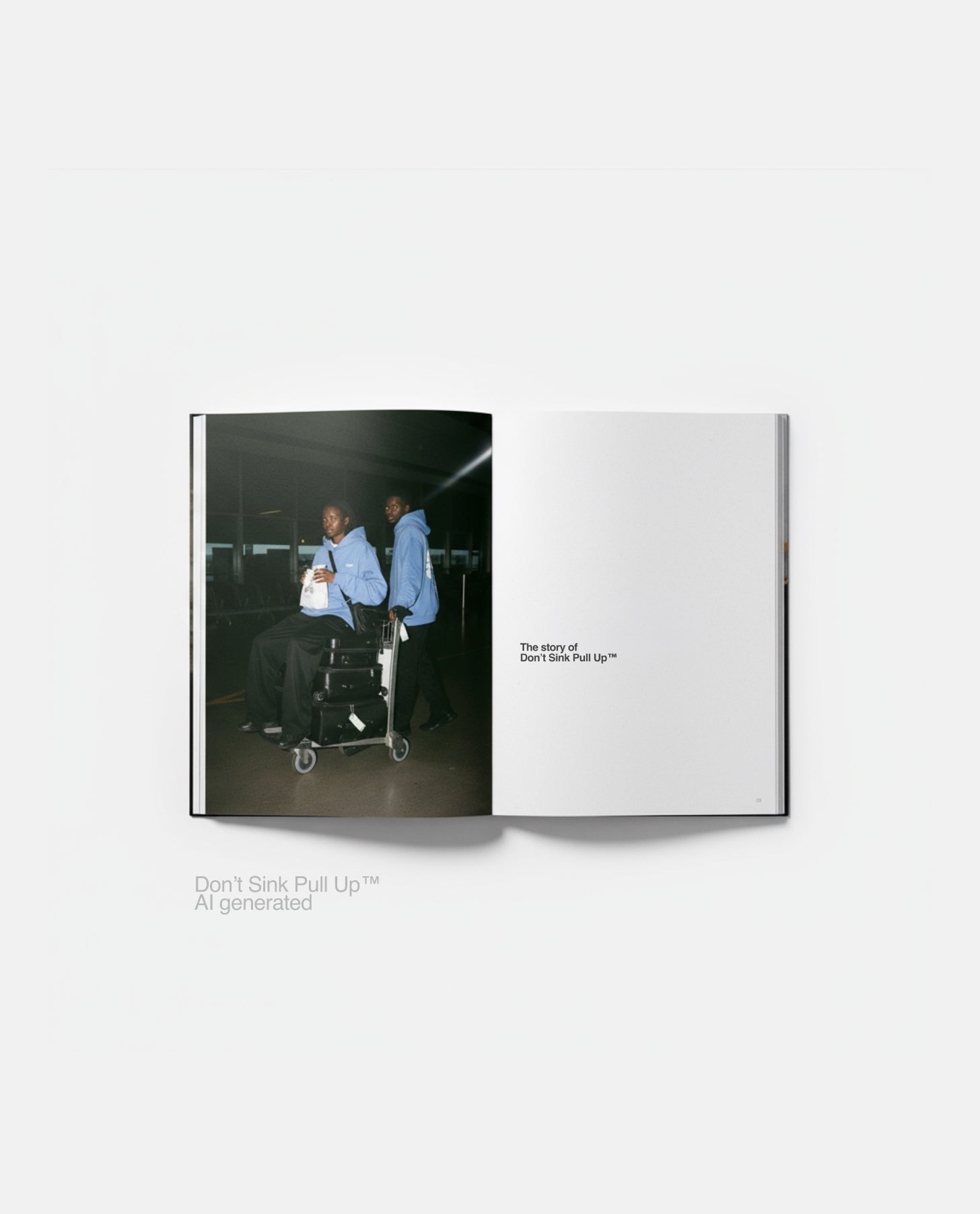
Some brands emerge from a trend. Others come from a business plan, and then there are brands that are born from a moment, a single sentence that suddenly changes everything.
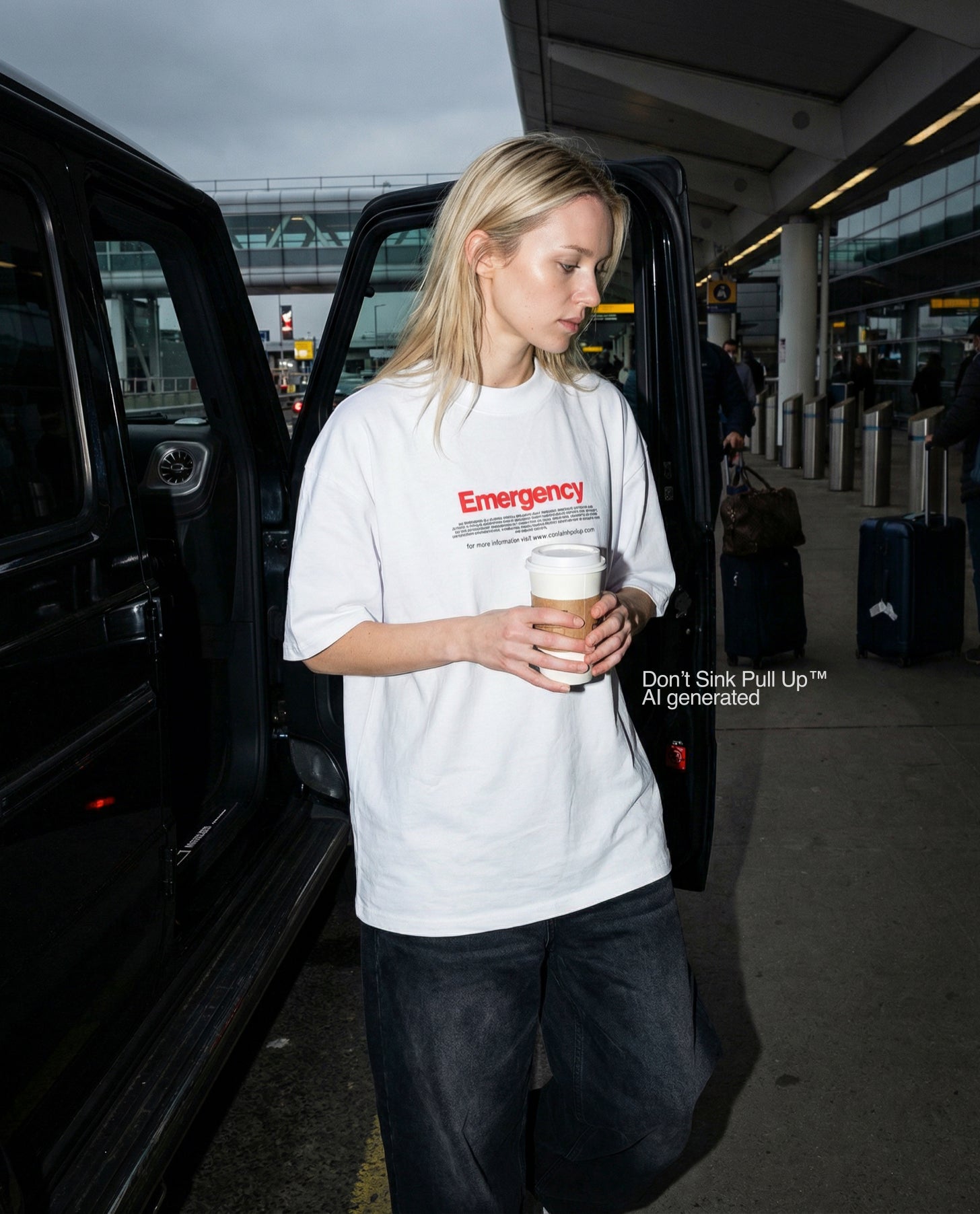
Our Incaseofemergency collection is back. Not by chance, but because it constantly raises questions. Because it tells a story that goes beyond material, colors, or details.
