

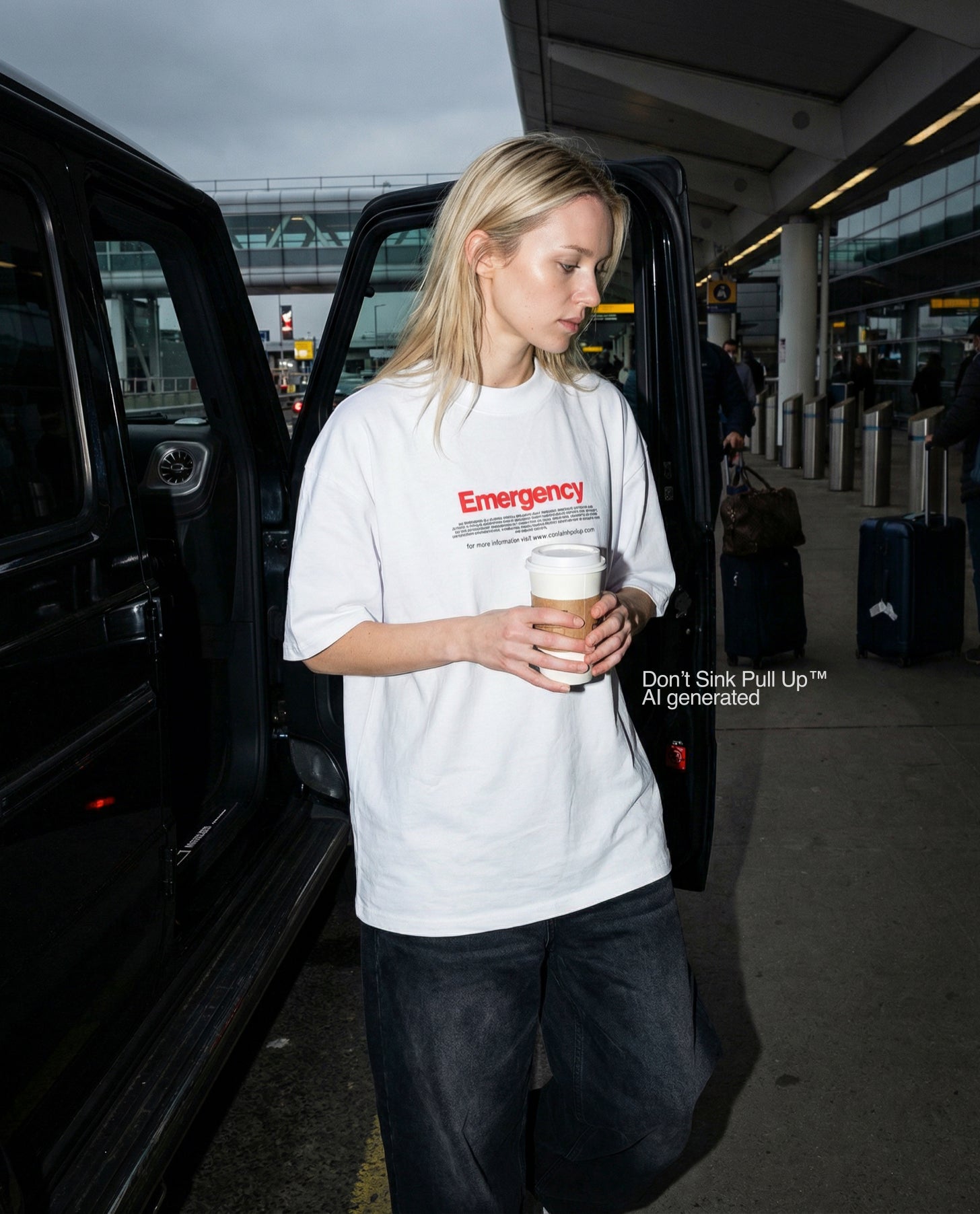
The story behind "Incaseofemergency"
Our Incaseofemergency collection is back. Not by chance, but because it constantly raises questions. Because it tells a story that goes beyond material, colors, or details.
In an emergency, every second counts. Panic is dangerous, attention is vital. That's precisely what our founder and designer, Philipp Böbs, wanted to highlight with this collection.
The idea came to him on an airplane. A perfectly ordinary flight. While the cabin crew explained the safety instructions, he looked around. Hardly anyone was listening. Headphones were on, movies were playing, sleep masks had long since been pulled down. Everything seemed routine. After all, many people fly regularly. Three times a week, maybe more often. Do they really have to listen every single time?
Maybe not. But most people don't fly all the time. And yet, almost everyone behaves the same way.
This observation became the starting point for the design. It's about precisely this moment of not listening. The passenger boards, sits down, tunes out. He relies on habit and experience.
The collection's history includes a cost-cutting measure by the airline. Quietly and efficiently, the life vests were replaced with significantly cheaper inflatable ducks. This information was actually communicated, but nobody listened.
Then the worst-case scenario occurs.
The passenger reaches under his seat, calm and convinced he knows what he's doing. He opens the packaging of what he thought was a life jacket and finds himself holding a duck. No protection, no safety. Just the realization that he hadn't been paying attention.
The The Incaseofemergency collection tells precisely this story. It's not a design about fear, but about responsibility. About the deceptive security of routine and how quickly we believe we're prepared.
It's not about the end.
It's not about the appearance of a safety card.
It's about the moment before.
Because in an emergency, it doesn't matter how often you've flown, but whether you listened.
Read more
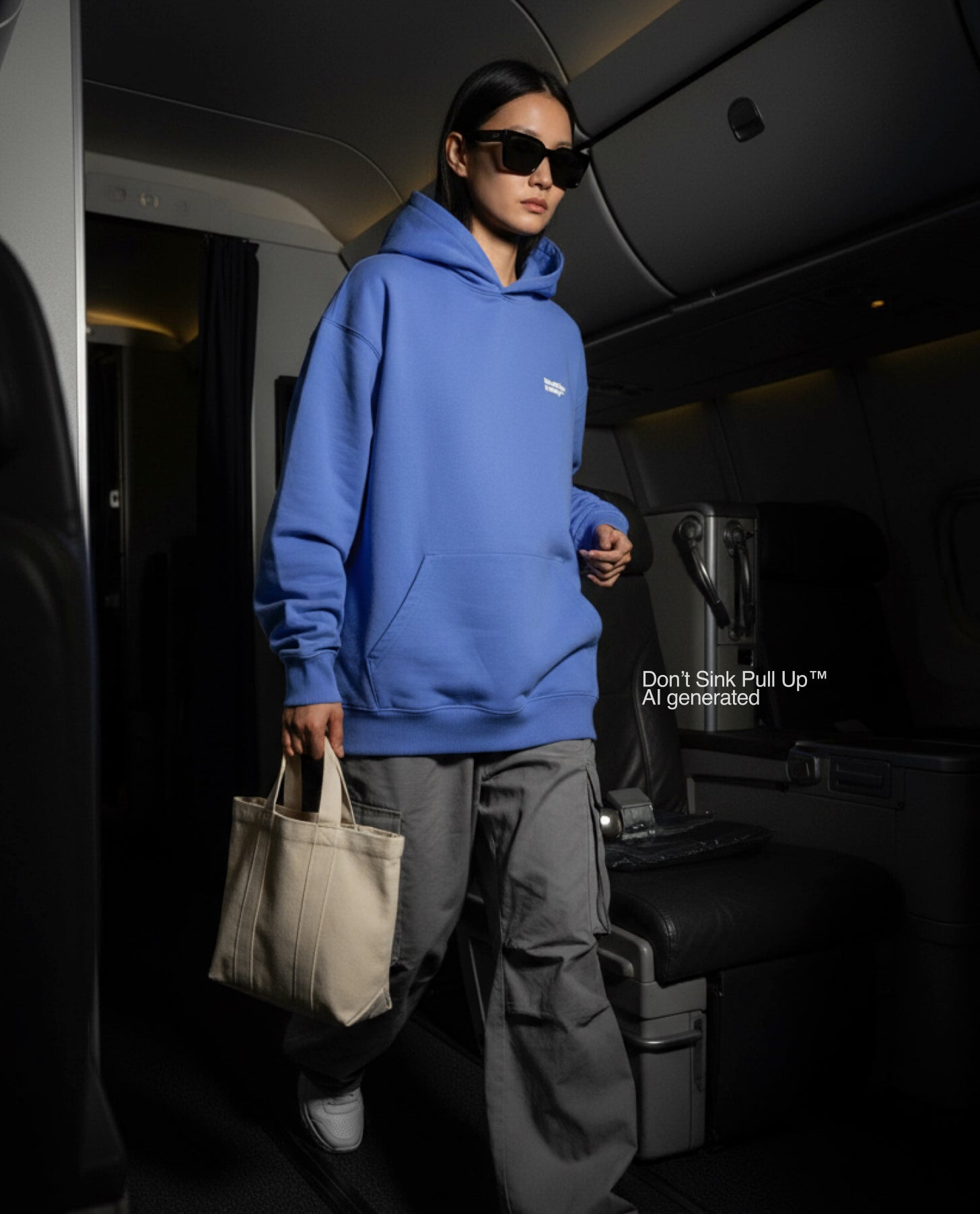
For our company, it seemed like a simple topic: advertising photos . Products are most effective in their natural environment. For example: mountain bikes belong in the mountains, guitars on stage ...

A fascination for aviation often begins at a young age. For many of us, it was gazing at the sky, the sound of a plane flying by, or the dream of one day sitting in a cockpit ourselves. This very e...
